Self-Drive vs Passenger Husky Tours in Tromso
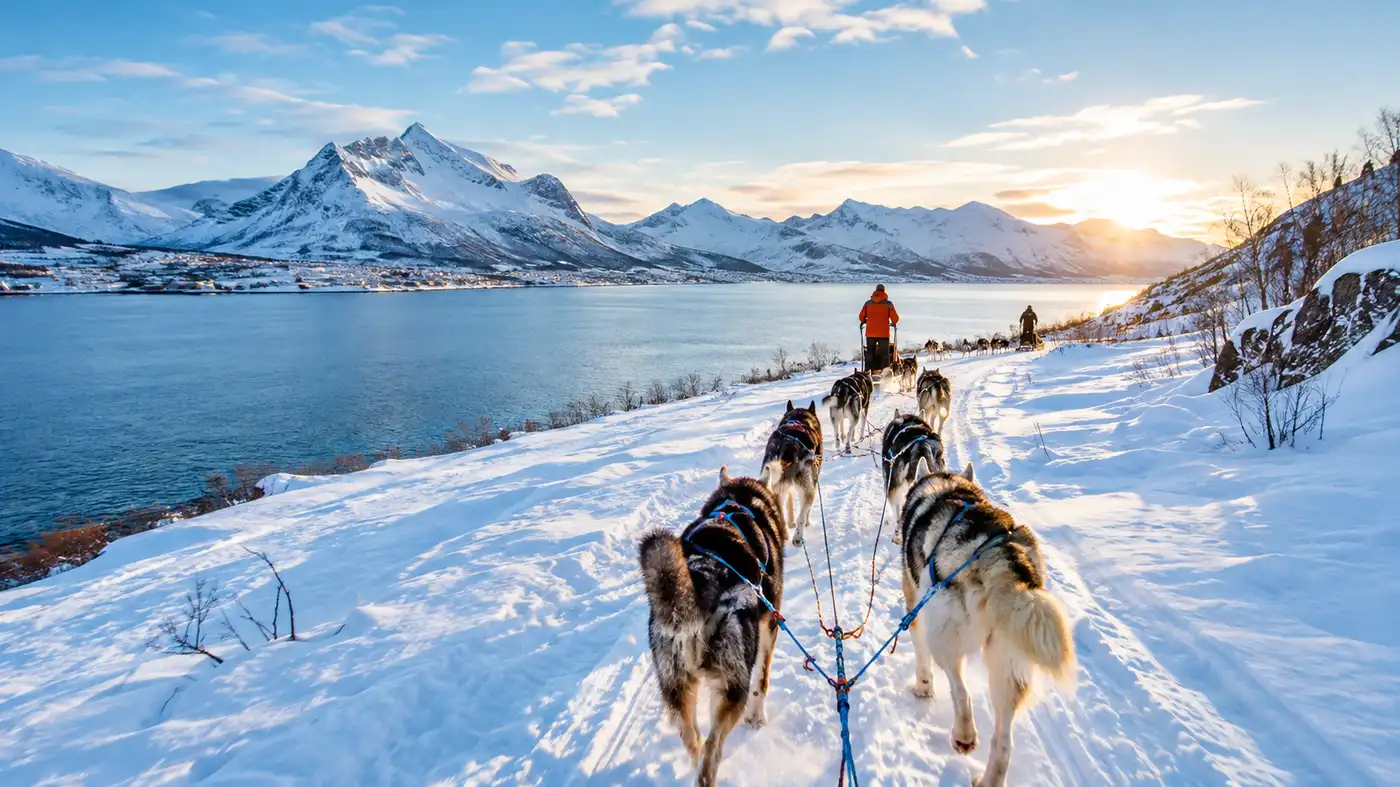
Standing on the wooden runners behind six Alaskan huskies, you realize within three seconds that nobody is driving this sled except you. The dogs jump against their harnesses, screaming in a high-pitched frenzy of pure energy, waiting for you to lift your heavy boot off the metal footbrake. When you release it, the sled lurches forward across the hardpacked snow with sudden, neck-snapping torque. Booking a self drive dog sledding tromso tour means you are not merely watching northern Norway drift past your nose. You are sweating into your thermal layers, leaning your body weight into ninety-degree bends, and hoping you remember which lever stops the sled before you end up tipped sideways in a birch thicket.
Most travelers heading into the Arctic circle assume every dog sledding excursion follows the same basic formula. You sit wrapped in reindeer skins while a burly local shouts commands to an obedient pack of animals. In Tromso, that is only half the story. The local husky kennels divide their winter tours into two distinct camps: passenger sleds steered by professional mushers, and self-drive expeditions where you take the reins yourself. Both offer a legitimate taste of norway dog sledding, but they are completely different adventures. Choosing the wrong one can leave you either exhausted and terrified or bored and cold.
Book your dog sledding tromso experience:
What Self Drive Dog Sledding in Tromso Demands from You
Driving your own team is dirty, noisy, physical work. The dogs do not run on commands like you see in old Hollywood films; there is very little "mush" or "gee" shouted into the wind. Instead, the team is controlled through tension on the gangline, balance on the runners, and ruthless use of the metal brake pad mounted between your feet. If you weigh under 65 kilos, you will find yourself stomping with both boots on that tooth-lined metal bar on downhill runs, feeling the friction grate up through your shin bones while six dogs try their hardest to pull you straight through it.
When the trail pitches upward, your role changes instantly. Sled dogs are remarkably strong, but hauling a wooden rig and two grown adults up an Arctic hill is grueling even for seasoned racing stock. You have to jump off one runner, keep a death grip on the handlebar with both mittens, and kick hard with your other leg like you are riding a giant, icy skateboard. On the steepest inclines, you run behind the sled, panting through your neck gaiter while the cold air burns the back of your throat. If you let go of the sled to catch your breath, the dogs will not wait for you. They will keep running, and your partner in the sled basket will suddenly discover what it feels like to be completely out of control.
Pro tip: Rent the outfitter's oversized snow boots even if you brought expensive winter hiking boots from home. Sled runners are narrow, slick strips of plastic-coated wood, and the thick, flat rubber soles of professional Arctic suits grip the footboards far better than standard tread.
Tours operating on a drive-your-own basis pair visitors up in twos. One person stands on the runners while the other sits tucked down low inside the basket. Roughly halfway through the route, usually somewhere around the 7 or 8 kilometer mark, the guides signal a stop along a frozen plateau so you can swap positions. It sounds straightforward enough. Trying to climb out of a tight nylon sled bag while wearing four layers of wool, an insulated boiler suit, and bulky mittens while the dogs shake and whine in the snow is an exercise in clumsy Arctic gymnastics. Still, driving offers an adrenaline surge that nothing else in northern Norway can replicate.
Riding as a Passenger: The Case for Sitting Back
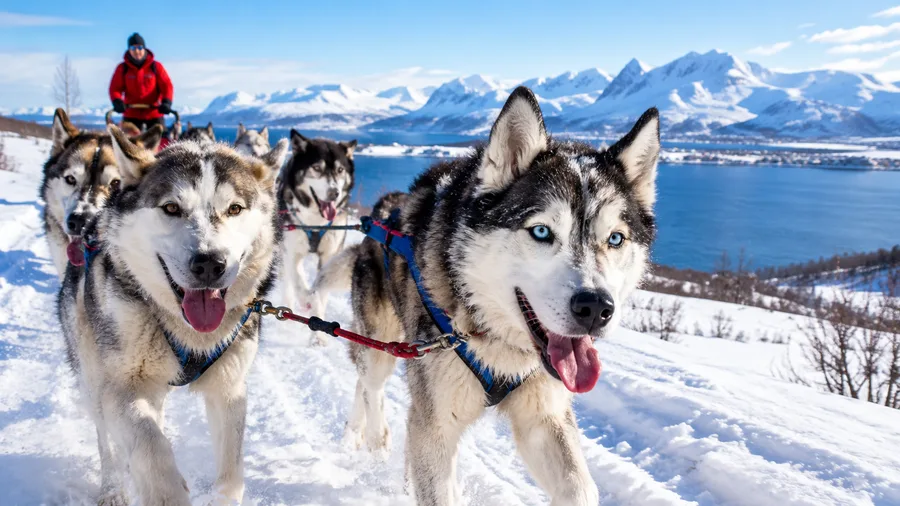
Sitting in the sled basket gets an unfair reputation among adventure travelers. People write it off as the tourist option, assuming it lacks the authentic grit of holding the handlebar. That is a mistake. When you sit inside the basket on a tromso husky ride, your eyes sit barely two feet above the surface of the snow. The sensory experience is intense in a quiet, hypnotic way. You hear the rhythmic panting of the pack, the hiss of the runner wax sliding across fresh powder, and the hollow clack of dog booties tapping on ice. Because your hands are free, you can actually look up at the jagged ridgelines of the Lyngen Alps instead of staring intently at the hindquarters of the wheel dogs to anticipate their next turn.
Passenger tours are almost always steered by experienced kennel staff or racing mushers who know the terrain intimately. They read the snow conditions like a book, steer around hidden rocks, and keep the team at a steady, rhythmic cadence. You get to absorb the vastness of the Troms wilderness without the nagging anxiety that you might flip the sled on an off-camber curve. It is also the only realistic choice if you want to take serious photographs. Trying to operate a camera or adjust a phone lens while driving a self-drive sled is an easy way to lose an expensive lens into a snowdrift, or worse, crash your team into the sled ahead of you.
The biggest challenge of riding as a passenger is thermal management. You are not moving. You are sitting motionless on a thin foam pad or sheepskin for 60 to 90 minutes while Arctic air washes over you at 20 kilometers per hour. Even at minus 5 degrees, the windchill inside an open basket bites hard. Your fingers and toes will go numb long before the driver gets cold, because their muscles are constantly firing to keep the rig balanced. Kennels do their best to wrap you in thermal blankets, but passive cold is relentless.
Note: If you are traveling with children under 12, kennel rules across Norway almost universally require them to ride as passengers in a sled driven by an experienced guide or strong adult, as kids lack the body mass required to engage the snow brake safely.
If your budget is tight, riding as a passenger on a larger shared sled can occasionally shave costs off the trip, as detailed in our guide to prices and budgeting for Tromso dog sledding. However, many operators charge identical rates for both formats because the kennel logistics, dog care, and wilderness permits remain the same.
Comparing the Two Husky Experiences
To decide which option fits your Arctic itinerary, look at how the physical demands and logistical realities match your travel goals. Neither format is inherently better, but choosing wrong will colour your memories of the day.
| Factor | Self-Drive Tours | Passenger Tours |
|---|---|---|
| Physical Demand | High; pushing, jogging uphill, balancing | Zero; sitting static in low basket |
| Photography | Difficult; impossible while driving | Excellent; hands free during entire run |
| Cold Exposure | Moderate; body heat offsets windchill | High; stillness invites deep cold quickly |
| Minimum Age | Typically 16 to drive, 12 to ride along | Often 4 to 6 years old |
| Steering Control | Full responsibility for braking and balance | Professional guide handles the team |
| Adrenaline Factor | Very high; constant focus on trail | Low to moderate; scenic and rhythmic |
The choice between these two formats often comes down to who you are traveling with. A couple seeking a physical challenge in the snow will find driving their own team unforgettable. A solo traveler who wants to soak in the silence, or a parent showing their child the tundra for the first time, will likely walk away from a passenger ride far happier.
Book your dog sledding tromso experience:
Physical Realities and Ethical Dog Sledding in Tromso
Let us talk about dog sledding tromso reviews and the ethical questions surrounding the sport. Not every kennel operates on the same standard of animal husbandry. When researching ethical dog sledding tromso, you want to look at how the dogs live when tourists are not around. Healthy sled dogs are lean, muscular, and notoriously enthusiastic about running. Alaskan huskies are not wild wolves; they are mixed-breed working dogs bred over centuries specifically for cold weather distance running. They do not need to be whipped or shouted at to move. In fact, keeping them from running requires standing hard on the footbrake.
When you visit a reputable operation, you should see clean, spacious dog yards, well-insulated individual doghouses, and animals that lean into human hands for ear scratches. Pay attention to how the handlers speak to the dogs. Good mushers use quiet, calm tones. They check dog paws for ice balls before and after runs, apply protective salves, and feed high-fat broth meals to keep hydration levels up during the brutal northern winters. If a kennel prevents you from walking freely through the yard or will not let you see the retired dogs, that is a red flag. The best dog sledding tour tromso providers take immense pride in showing off every corner of their homestead, including their geriatric pens where 13-year-old veterans sleep on deep beds of clean straw.
Before you commit to a self drive dog sledding tromso outing, be completely honest with yourself regarding your balance, core strength, and joints. Sledding is bumpy. You are standing on two flexible laths of ash wood that bend with every rut and drift in the trail. If you have an unstable knee, a bad lower back, or brittle wrists, the vibrations and sudden jolts will hurt. If the sled banks hard on a corner and tilts, your instinct must be to drop your center of gravity and step on the brake. Panicking and bailing out leaves the dogs pulling a driverless sled down the trail into the team ahead.
- Knee and hip health: You need stable joints to absorb constant shocks from uneven snow trails without buckling.
- Upper body stamina: Holding the handlebar against pulling dogs requires steady forearm, bicep, and shoulder tension.
- Core stability: Shifting your weight from side to side keeps the sled upright on banked curves and deep drift edges.
- Cardiovascular fitness: Running uphill behind the rig in knee-deep powder tests your lungs within 30 seconds.
If reading that list makes your joints ache, pick the passenger sled. There is no shame in sitting down and letting an Arctic veteran handle the heavy lifting while you watch the snowy peaks roll by.
Morning vs Afternoon: Timing and Light in the Arctic
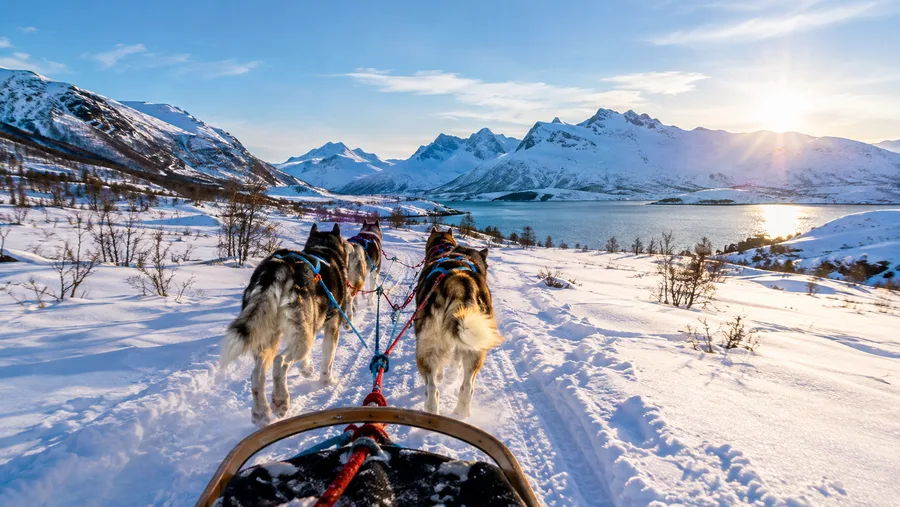
Deciding between a tromso dog sledding morning slot and a tromso dog sledding afternoon tour changes everything about the atmosphere of the run. Light is a strange, shifting beast in northern Norway. Between late November and mid-January, the sun never actually breaches the horizon. The entire day consists of a dusky blue twilight that lingers for three or four hours around midday before plunging back into inky darkness. For those curious about how daylight and snow depths shift through the winter months, reviewing our Tromso dog sledding season guide helps set realistic expectations for daylight hours.
A morning run usually departs the city center around 8:00 AM while it is still pitch-black. By the time the bus drops you at the kennel in the Tamok Valley or Kvaløya, the horizon is glowing with a pale, cold indigo. If the sky is clear, the morning light paints the mountain peaks in soft pastel pinks and golds, even while the valley floor stays dim. Driving during these twilight hours feels primal. The dogs are fresh out of their morning rest, bursting with energy, and the trails are crisp from the overnight freeze.
Afternoon runs tend to start around 1:00 PM and quickly transition into night sledding. By 3:30 PM, the light has died completely. If you book an afternoon trip, you will likely run the second half of the trail with an LED headlamp strapped to your hat, cutting a narrow white beam through the falling snow. Some travelers find this eerie and thrilling; others find it frustrating because the grand Arctic vistas vanish into the dark. On clear nights, an afternoon tour can morph into a northern lights run, where emerald bands ripple across the sky above your team. If that sounds appealing, take a look at what to expect on a northern lights dog sledding tour in Tromso before deciding on your departure slot.
- Morning departures (08:00 to 09:30): Offer the best chances for landscape photos during the short Arctic twilight window.
- Midday slots (10:30 to 12:00): Provide the highest ambient temperatures, making it slightly easier to keep fingers warm.
- Late afternoon departures (13:00 to 15:00): Run straight into full Arctic darkness, maximizing your chances of seeing the aurora overhead.
- Weather shifts: Coastal snow conditions around Tromso change fast, meaning afternoon trails can be either soft mush or windblown ice.
Weather plays a massive hand in norwegian dog sledding. Fresh powder makes driving much harder because the sled sinks and the dogs work twice as hard, forcing you to kick and push frequently. Hardpacked, icy trails make the sled lightning fast, where your entire focus shifts to riding the brake so your team does not run up the heels of the dogs in front of you. Husky sledding norway is never predictable, which is precisely why it remains one of the premier Arctic activities on earth.
Frequently Asked Questions about self drive dog sledding tromso
Can complete beginners really do self drive dog sledding in Tromso?
Yes, the vast majority of visitors who drive a sled have never touched a husky harness in their lives. The guides give a clear, practical safety briefing covering the brake, stance, and hand signals before you touch the sled. The lead guide drives the front team, and the other dog teams naturally follow the trail behind them in single file, so navigation is not your responsibility.
What happens if I fall off my sled while driving?
If you fall off, the golden rule of mushing is very simple: never let go of the handlebar unless it becomes physically impossible to hold on. The dogs only know how to pull, and if you let go, they will leave you behind in the snow. If you do get separated, do not panic. Sled dogs follow the guide team ahead, and guides are trained to spot loose teams, stop the line, and secure the sled quickly.
Which option is better for seeing the northern lights?
Riding as a passenger is far better for aurora viewing. When you drive the sled, your eyes must stay glued to the trail, the distance between your team and the sled ahead, and the tension of your footbrake. A passenger can lean their head back against the sled bag and scan the entire night sky continuously without risking a collision.
Quick Reference
- Self-drive teams switch drivers halfway through the run
- Passenger sleds offer the best visibility for cameras
- Minimum driving age is strictly 16 across most kennels
- Expect to run and push the sled on steep hills
Book your dog sledding tromso experience:
My Take
If you have reasonable balance, enjoy physical exertion, and do not mind the occasional bruised knee or sore back, book the self-drive option without hesitation. Standing on the runners while six ecstatic huskies drag you through a frozen Arctic valley connects you to the realities of northern life in a way sitting down simply cannot match. It demands your full attention, burns hundreds of calories, and leaves you grinning like a lunatic over your post-ride reindeer stew. But if your idea of a holiday is soaking up dramatic landscapes without stress, staying as warm as humanly possible, or taking crisp photographs of the Lyngen Alps, do not let anyone shame you into steering. Take the passenger seat, let an expert musher work the brake, and enjoy the ride.
Read more about dog sledding tromso.