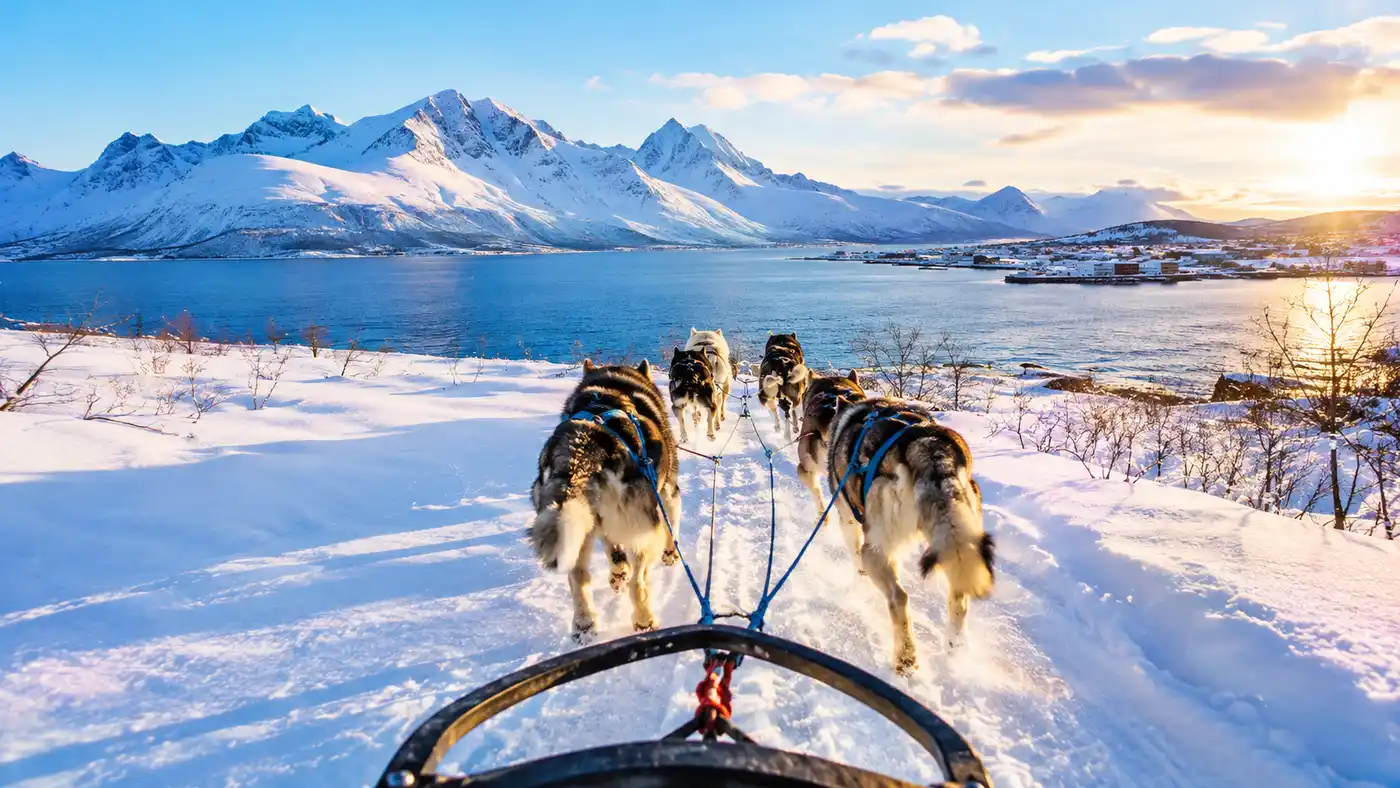
Overnight and Advanced Dog Sledding in Tromso
Most people who visit northern Norway settle for a two-hour spin around a groomed track, followed by hot berry juice in a crowded wooden hut. There is nothing wrong with that if you just want a quick selfie, but if you want to understand what mushing actually feels like, book a tromso dog sledding overnight tour. When the tour buses leave at four in the afternoon, the silence that falls over the Arctic wilderness is heavy, sudden, and completely intoxicating.
Going past the day-trip perimeter changes the dynamic between you, the sled, and the dogs. You stop being a spectator being carted across the snow and become an active team member responsible for six living, breathing athletes who look to you for direction. Out on an expedition, you chop frozen meat, melt snow for water, and learn how to kick and run uphill behind a sled in minus seventeen degrees. It is exhausting work, yet it ruined ordinary travel for me forever.
Book your dog sledding tromso experience:
Why Choose a Tromso Dog Sledding Overnight Trip Over a Day Tour?
Day tours are rushed by nature. You arrive, squeeze into a rented thermal suit, listen to a hurried safety briefing, stand on the brake for an hour, and then you are herded back to the minibus. On an overnight journey, the clock stops ticking. The dogs settle into an even trot once they realize they are running for hours rather than sprinting for tourists, and their manic barking gives way to the rhythmic swish of runners gliding through fresh powder.
Darkness comes early in northern Norway between November and February. Out on the trail around 3 PM, dusk settles across the Lyngen Alps in bruised shades of purple and burnt orange. By 5 PM, the sky turns pitch black. Driving a dog team in complete Arctic darkness, illuminated only by your headlamp beam bouncing off canine tails and floating ice fog, feels like running a mission to the moon. If the skies clear, you get hours of green aurora twisting directly above your sled without forty other people chattering beside you.
The bond you build with your team during an overnight trip cannot happen on an afternoon visit. You learn their names quickly. You figure out which dog pulls hardest on the hills, which wheel dog leans slightly to the left, and which lead dog ignores your voice commands unless you drop your tone an octave. By nightfall, after you have bedded them down in fresh straw, those dogs will happily lean their heavy heads against your knees while you scrape ice balls from between their toe pads.
Pro tip: Keep your headlamp battery pack inside your jacket collar against your neck; lithium batteries freeze solid in under twenty minutes of trail exposure at -15°C.
Expedition Styles: Choosing Your Tromso Overnight Dog Sledding Experience
Not every multi-day tour demands sleeping on ice. Some operators run loops that bring you back to a remote wilderness lodge with a wood-fired sauna and decent mattresses, while true backcountry expeditions push out into basic trapper cabins or traditional Sami lavvu tents. You need to be brutally realistic about your cold tolerance before reserving a spot.
Rustic wilderness cabins are my personal sweet spot. These small log shelters scattered through the inland valleys have wood stoves, bunk beds with reindeer pelts, and zero cell service. You still have to carry your gear, chop firewood, and carry buckets of water melted from the nearby creek, but you get to dry your sweaty wool socks over the stove while dinner simmers. It strikes the right balance between gritty mountain living and restorative rest.
If you choose a winter tent expedition, prepare for relentless manual labor. Pitching four-season canvas shelters in hard-packed wind crust requires snow shovels, heavy deadman snow stakes, and stubborn patience. Your body heat will fight a losing battle against the frozen ground, meaning a minus-thirty sleeping bag and an insulated air pad are mandatory gear items. It is intense, humbling, and definitely not for casual vacationers.
| Expedition Style | Typical Duration | Nightly Shelter | Daily Mushing | Physical Effort |
|---|---|---|---|---|
| Wilderness Lodge | 2 days / 1 night | Heated private room | 25 to 35 km | Moderate |
| Trapper Cabin Loop | 2 to 3 days | Shared log cabin with stove | 35 to 55 km | High |
| Lavvu & Tipi Camp | 2 days / 1 night | Insulated canvas tent, central fire | 30 to 45 km | High |
| Backcountry Expedition | 4 to 6 days | Mountain huts and expedition tents | 50 to 80 km | Extremely Demanding |
The Reality of Advanced Dog Sledding Tromso
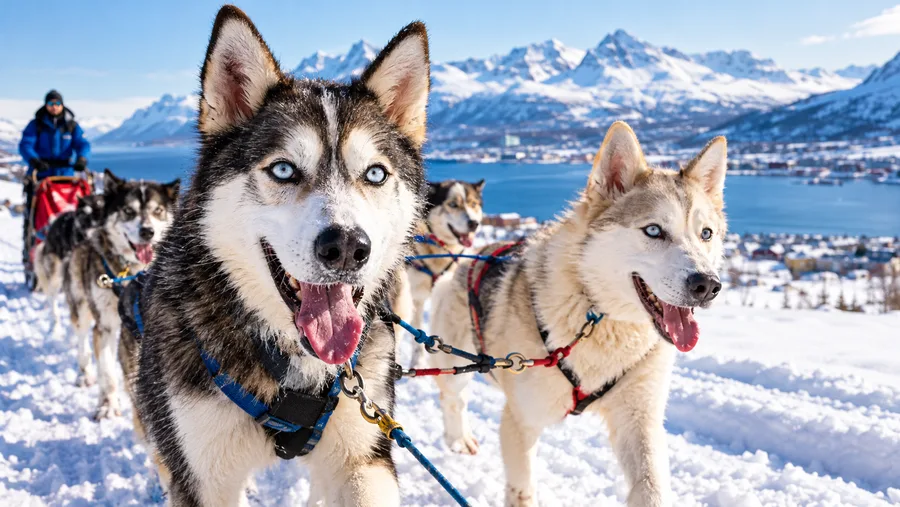
Mushing sounds romantic until you hit your first steep ascent in knee-deep sugar snow. Modern day-trippers often ask whether dog sledding counts as real exercise. It absolutely does. When the snow is deep or the sled is loaded with sleeping bags, dog food, and camp fuel, six dogs cannot pull your dead weight up a thirty-degree incline. You must jump off, keep one hand firmly on the handlebar, and run uphill alongside the sled while pushing with all your strength.
If you fail to push, the dogs simply stall. They will turn their heads, glare at you with unmistakable judgment, and wait until you pull your weight. Stepping off the runners into loose drifts means your boots sink deep, making every stride a lung-burning struggle. You sweat through your base layers, gasp for freezing air, and desperately hop back onto the wood slats the exact second the ground levels off.
Steering is equally active. Sleds have no steering wheel. You carve turns by throwing your hips outward, leaning your entire body weight into the turn, and pumping the snow brake with your right boot to keep the rear sled basket from swinging wide into birch trees. If you have done basic driving before, reading our guide on self-drive husky tours in Tromso offers a clear look at how active steering differs from sitting passively inside the basket.
Note: Most operators will not take you on a technical multi-day run without verifying your baseline fitness; expect a steep learning curve if you have balance issues or back trouble.
Book your dog sledding tromso experience:
What Daily Camp Life on the Trail Actually Looks Like
Your day does not end when you park the sled at camp. In fact, human comfort comes dead last in mushing culture. Before you take off your mittens, loosen your boots, or step inside a warm shelter, you must take care of your six teammates. Neglecting the dogs on the trail is the quickest way to ruin an expedition and earn the genuine wrath of your guide.
- Dropping the snow hook: secure the metal claw into deep snow and tie off the sled mainline to a sturdy birch trunk before touching any gear.
- Uncoupling the harness lines: unsnap tuglines, remove frozen harnesses over tired ears, and check their paws for cracks or bleeding.
- Spreading fresh straw: build thick, dry nesting beds for every dog, positioning them out of the direct bite of valley wind.
- Preparing high-fat soup: boil snow over a roaring camp cooker and ladle hot broth filled with minced beef and lard to restore hydration.
- Securing the sled: flip the sled upside down to inspect wooden runners, scraping away icy ridges with a plastic edge so you can glide smoothly at dawn.
Only after every dog is curled up into a snow-dusted doughnut with a tail covering its black nose can you head inside the cabin. Cooking camp food for yourself feels deeply satisfying after four hours on the trail. You slice cured reindeer sausage, boil potatoes, and drink endless cups of black tea that tastes faintly of pine smoke and damp wool. Sleep comes fast. Most mushers fall asleep by 9 PM without ever touching a book or checking their phones.
Packing and Preparing for Inland Arctic Conditions
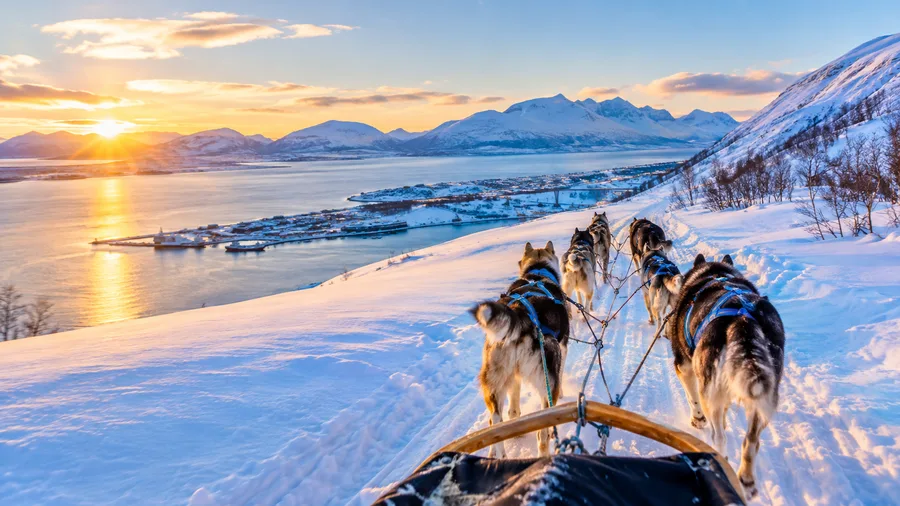
The climate inside Tromsø city is remarkably mild because of the Gulf Stream. It hovers right around freezing, with wet, heavy sea snow that clings to everything. Overnight routes, however, run inland toward the Tamok Valley, the Finnish border, or deep into the interior plateaus where continental weather takes over. Out there, the temperature drops off a cliff. Seeing minus twenty-five Celsius on an inland ridge is routine, and the air is dry enough to crack your lips within hours.
Expedition operators furnish you with a monstrous thermal snowsuit, thick beaver-nylon boots, and windproof outer mittens, but what you put under those heavy layers makes or breaks your trip. Cotton is completely useless here. If you sweat into a cotton t-shirt while pushing the sled up a ridge, that moisture will freeze against your ribs the second you stand still on the downhill run. You need two sets of thick merino wool underwear, heavy wool socks, and a fleece midlayer with a high collar.
If you plan to run trails late in the winter under clear northern skies, pairing your dog sledding trip with aurora chasing is practically effortless. You will spend hours outside far away from city streetlamps, which we explain thoroughly in our overview of Northern Lights dog sledding in Tromso. Darkness in the inland valleys is pure and free of light pollution, meaning even faint solar activity turns into vivid overhead curtains while you melt snow over the fire pit.
- Pack three sets of liner gloves: switch to dry inner gloves whenever your palms get sweaty from wrestling the heavy sled handlebar.
- Bring a fleece neck gaiter instead of a scarf: loose scarves snag on sled brake bolts and freeze solid from moisture in your breath.
- Use zinc balm on exposed skin: moisture-based moisturizers freeze inside your pores and cause nasty surface frostnip on cheekbones.
- Carry chemical hand warmers in your pockets: shove them straight into the toes of your heavy boots before leaving camp at dawn.
Frequently Asked Questions about tromso dog sledding overnight
Do I need previous mushing experience to join an overnight tour?
No, but you need decent physical stamina, good balance, and mental grit. Guides provide intensive training on braking and steering before leaving the kennel, though you must be ready to run uphill and work outside in deep snow.
How cold does it get during an overnight dog sledding trip?
While the coast near Tromso rarely drops below -10°C, inland expedition routes regularly sit between -15°C and -28°C at night. Cabins provide wood heat, but tent and lavvu nights require serious arctic sleeping bags.
What happens if I crash my sled on the trail?
Crashing is part of learning to mush. The cardinal rule is simple: never let go of the handlebar. If you fall, you hold on and drag behind until the brake engages or the dogs slow down; letting go means the team runs ahead without you.
How do the dogs handle sleeping outside in sub-zero snow?
Alaskan huskies have thick double coats consisting of a dense underwool layer and stiff guard hairs that trap warm air against their skin. Provided with dry straw beds out of the wind and calorie-dense meat broth, they sleep comfortably in deep sub-zero cold.
Quick Reference
- Typical daily trail distance: 30 to 60 kilometers
- Average inland winter temps: -10°C to -25°C
- Main expedition season: December through mid-April
- Group size limit: 4 to 6 sleds per guide
Book your dog sledding tromso experience:
The Bottom Line
An overnight dog sledding trip is not a luxury spa vacation. You will wake up stiff, smell intensely of wood smoke and wet dog hair, and your knuckles will ache from gripping a wooden bar against biting crosswinds. But watching morning twilight spill across an untouched snowy valley while six excited dogs yelp for their breakfast is something you never shake off. If you have the stamina for it, skip the bus tours, pull on heavy wool, and head into the wild for the night.
Read more about dog sledding tromso.